Everyday recovery
CJC-1295 reviews of sleep and exercise recovery
Less soreness sounds straightforward until training, sleep, food and another compound all enter the account. The experiences are interesting; their causes remain unsettled.
Exercise recovery
CJC-1295 accounts often describe less lingering soreness and feeling ready for another workout sooner. These reports are anecdotal, rather than clinical evidence. The source material supplies neither a counted group nor verified outcomes, and the accounts commonly involve changes in training or other habits.
Feeling less battered after exercise would be a welcome change. But the meaning of recovery needs some precision. Less perceived soreness, restored strength and repaired tissue would be different outcomes. The published human CJC-1295 studies measured GH and IGF-1; they did not establish those exercise outcomes.
Better sleep or ordinary adaptation to training could also contribute to an encouraging account. Restored function, measured under controlled conditions, would make the case much stronger.
Sleep and daytime energy
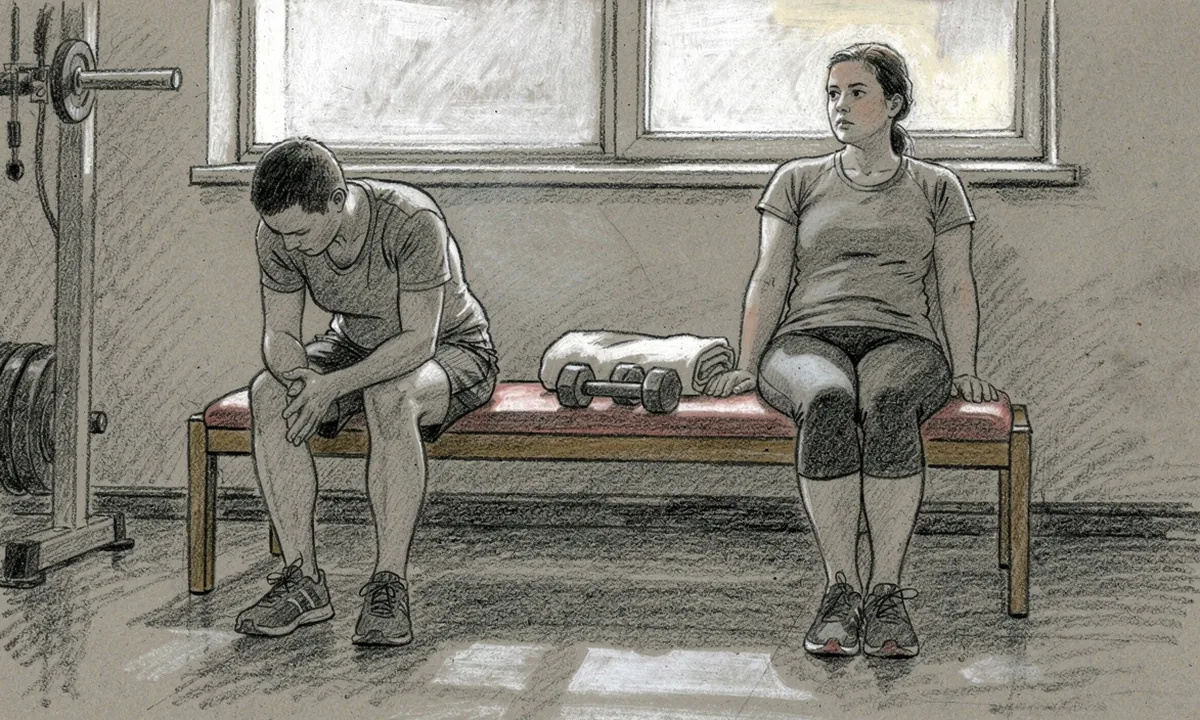
Deeper sleep, falling asleep sooner and fewer awakenings appear in the anecdotal accounts. Some people connect their daytime energy or clearer thinking to that sleep. Others report no energy change, or describe drowsiness and fatigue instead.
Growth hormone’s pulse pattern has been studied under CJC-1295 stimulation. Those hormone recordings leave sleep quality unmeasured as a benefit. The biological connection has its appeal; the contradictory energy reports leave me doubtful about a confident prediction.
An average hormone value also gives no account of how an individual slept. The distance between those two observations is exactly where the recovery claim still needs a trial.
Appearance and skin
Other anecdotal accounts describe gradual loss of waist fat, a more defined appearance or better muscle retention during dieting. Changes in food intake and exercise frequently accompany those accounts. Firmer-feeling skin, joints or connective tissue are subjective impressions in this material as well.
The word recovery sometimes expands to cover all of that. I think it becomes less useful as it expands. A leaner reflection, less soreness and firmer skin need separate measurements before they can support separate claims. The early human CJC-1295 findings provide no such set of outcomes.
Appetite with ipamorelin
Hunger is reported particularly in accounts involving ipamorelin alongside CJC-1295. People often attribute it to the ipamorelin partner. That attribution remains anecdotal; the accounts cannot isolate either compound’s contribution.
The combination discussion covers the receptor rationale and the missing controlled human efficacy trial. I’d be especially cautious about calling an experience a CJC-1295 result when several interventions changed together.